Celebrating the Divine Feminine
I remember very clearly being called a “tomboy” as a kid without even knowing what that meant. But I did know I enjoyed climbing trees, wearing shorts instead of dresses, and singing at the top of my lungs in the shower. I played in the puddles and rolled in the grass. And wanted so badly to fit in with the boys; mostly, my big brother, my dad, and if there was time my really cute next-door neighbor. I heard so often the words “You can’t play football with us Carrie, you’re a girl” and “you’re too girlie” spoken with negative tones and connotations, which I believe led me to think femininity was bad. I didn’t even know at that young, impressionable age, what aspects were considered feminine and/or masculine. I only knew what I observed; that something about me being a girl wasn’t admired or accepted. By my teenage years in the early 1990’s, feminism was making a vast wave among my generation. At that vulnerable age I was experimenting with makeup, personal expression, and what hair style would flatter me. A group of friends who chose to make a statement by dressing in baggy clothes, wearing no makeup and not styling their hair, told me I was acting too feminine. Because we had to show we could be masculine and do masculine things. And while I still wanted to fit in with the boys, truthfully, at that time I was really enjoying the exploration of my softer feminine side. I felt so torn and confused! Fast forward 30 years later, I think I finally understand! My aim here is to help you understand what the divine feminine is and how it can bridge a gap into understanding for you too.
Let’s start with the roots! There is a deep, ancient history of humans celebrating and worshiping the feminine. Which makes sense because women are the givers of life and have been the focus of creation myths dating back to paleolithic and neolithic eras. Those who gave life were revered and respected in ancient Celtic, Roman, Native American, Egyptian, and different indigenous tribes globally. And there seems to have been an understanding of the importance of a balance between feminine and masculine. “When these two energies are in sync, we experience a profound sense of wholeness and alignment” (How Stuff Works, 3). Sadly, since the rise of the patriarchy around the world, the importance of the feminine energies appears to have been diminished and, in some cases, even condemned. Perhaps this is one of the reasons why phrases like, “you’re too girlie” and “stop being girlie,” have taken root and spread. Femininity became negative, associated with weakness, fragility, and even stupidity. Just a few examples, 16th-18th century witch hunts, banning women from voting due to their “lack of intellect,” and the 18th century common law that a woman’s identity was defined only by her husband. I listed some references and great reads below if you want to explore more. What’s fascinating is that despite the suppression, feminine power has always fought back and in some cases even grown stronger, which is what we are currently seeing in the 21st century.
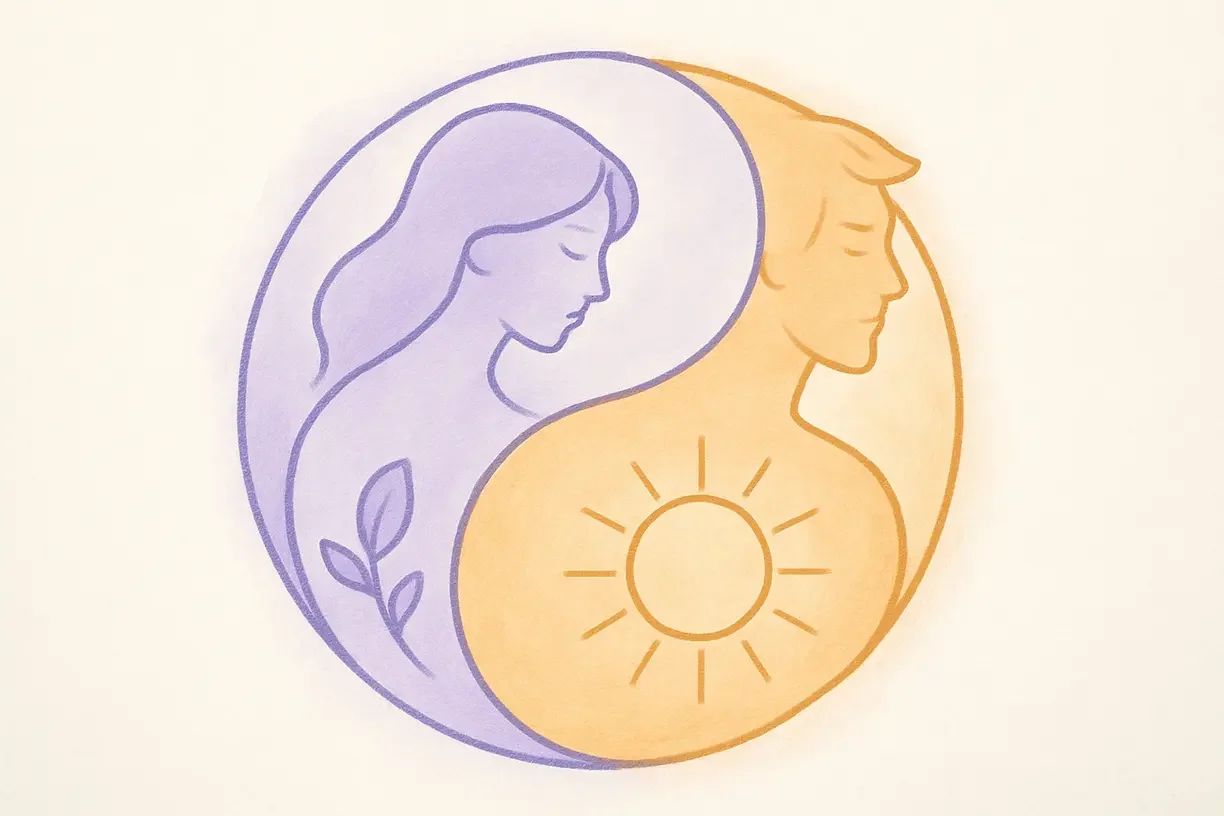
Truth is, humans need both of these energies to thrive. Both are equally important and none are “bad.”
But what exactly is the divine feminine and how does it affect us? There is a spiritual and metaphysical aspect to divine femininity. It is an energy and a power that is associated with the earth, nature, nurturance, fertility and rebirth, wisdom, compassion, love, creativity, patience, and intuition. All traits that are incredibly important for a balanced mind and body. The power of the feminine is not greedy and does not want for domination but instead is a softening into compassion. The feminine understands the importance of nature and nurture as part of our survival. The feminine is also found in the biological and physical body and according to somatic therapies and poly vagal theory, our autonomic nervous systems are affected by feminine and masculine energies. the feminine is connected to the para-sympathetic response, which is a softening, grounding, rest and digest mode, and sometimes freeze survival mode. Masculine energy is considered sympathetic energy, movement, excitement, focus, and sometimes fight and flight survival mode. When the feminine energy is wounded due to trauma, suppression, societal messaging, grief, etc., it can turn into the worst version of itself, like insecurity and co-dependency. The same is true if the masculine energy is wounded, often becoming Narcissistic behaviors. When there is a cohesiveness to these energies, which means allowing space for both of them and celebrating them, we find safety, support, confidence and self-trust.
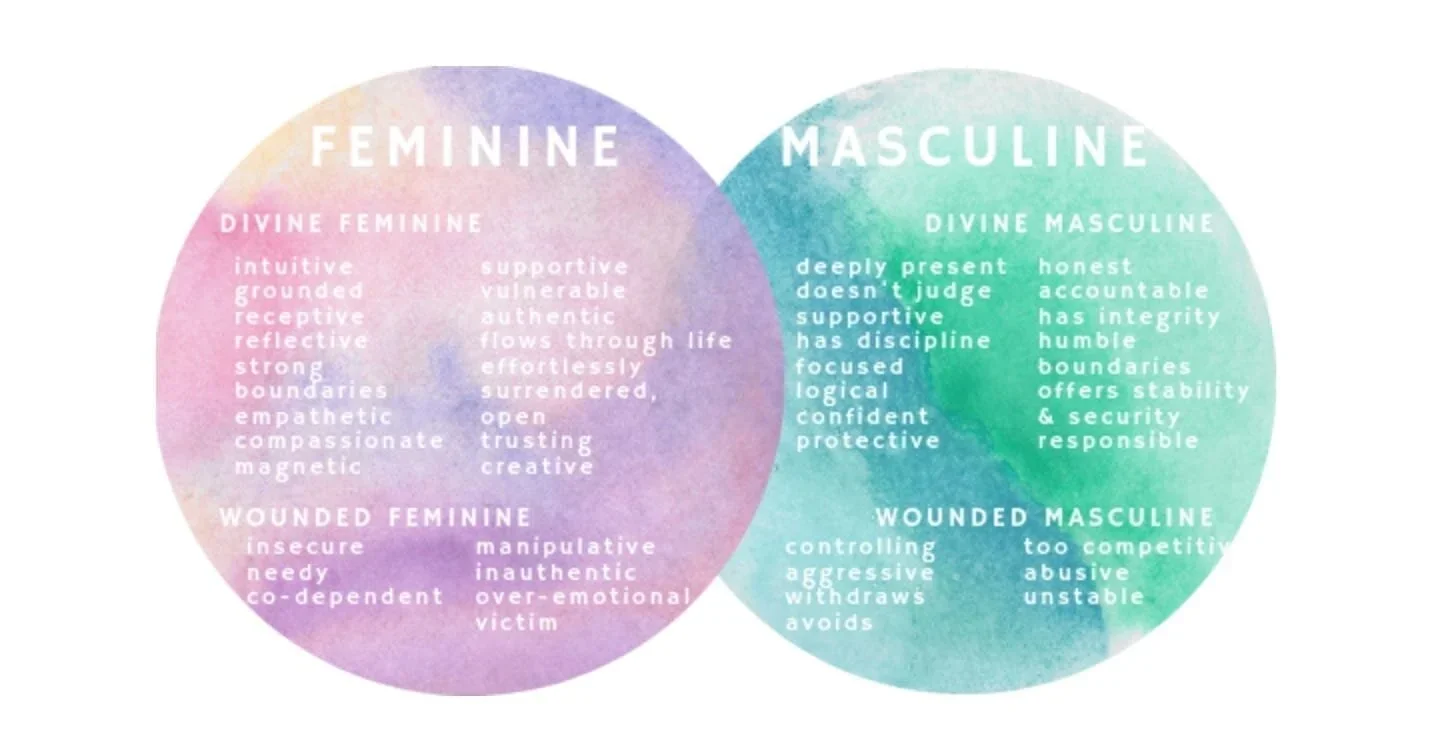
If you believe your divine feminine energy has been wounded, here are some ways to begin and/or continue your healing journey:
Movement, meditation and breath work that supports the softening and resting of your nervous system.
Dancing, especially free dance for the wild and intuitive part of you.
Mantras, prayers and phrases that remind you to slow down and relax your muscles.
Rituals that offer respect and reverence to the feminine archetype. (candles, music, prayer, singing, dancing, women’s groups, etc.)
Self-compassion practices to help you get reacquainted with your feminine aspects.
Mindfulness practices that increase your self-awareness so you can build trust in your intuition.
As I personally settle into my middle womanhood era, I think about what I might say to my childhood self. I would love to tell her to be as girlie as she wants to be. To dance and sing and keep climbing trees and rolling in the grass, to fix her hair and wear clothes that make her want to dance, because that was what she loved. I would help her understand that she carries both feminine and masculine energies inside her, and to cherish and express them both.
Regardless of historical conditioning, worshiped deities, nervous system and metaphysics, the most profound and important part of celebrating the divine feminine is just being true and compassionate to yourself.
References:
When God Was a Woman: An Introduction to the Wisdom of the Sacred Feminine - Braided Way Magazine
The Divine Feminine in Mythology, Religion, and Spiritual Practices | HowStuffWorks
Simone de Beauvoir, The Second Sex (1949; English trans. 1953) - A foundational feminist text
Martha Vicinus (ed.), Suffer and Be Still: Women in the Victorian Age (1972/1973) - Collection of Victorian essays
Highly recommended reads for feminine empowerment:
Pope Joan - Donna Woolfolk Cross - Historical Fiction
Women Who Run With the Wolves - Clarissa Pinkola Estes - Myths and stories
When Women Were Birds - Terry Tempest Williams - Stories
The Witches - Stacey Schiff - History
The Red Tent - Anita Diamant - Historical (bible) Fiction
The Book of Longings - Sue Monk Kidd - Historical (bible) Fiction